
Last Tuesday, a client named Margaret called us in a panic because her primary care doctor of 15 years was suddenly “out of network” for 2026. This type of surprise makes finding the best medicare advantage plans for seniors feel like a stressful maze rather than a simple choice. We know you just want to keep your doctors and avoid hidden costs that eat into your savings. It’s completely normal to feel anxious about the new $2,000 out-of-pocket cap for prescription drugs or those flashy “zero-dollar” advertisements that seem too good to be true.
We’re here to cut through that marketing noise and help you identify the right coverage based on your specific health needs and budget. Our goal is to move you from confusion to confidence by explaining exactly how these 2026 changes affect your wallet. We’ve simplified the latest data and plan ratings into a straightforward guide. You’ll discover how to secure predictable healthcare costs and keep your preferred physicians without the typical insurance headaches.
Key Takeaways
- We explain why the “best” plan is entirely subjective and how to look past star ratings to find a 2026 option that fits your unique health status and ZIP code.
- Gain clarity on the 2026 landscape by comparing HMO and PPO “flavors” to ensure you have the network flexibility you deserve.
- Navigate the “Advantage vs. Medigap” debate with our breakdown of total yearly costs, helping you choose the path that offers the most financial peace of mind.
- Follow our 5-step checklist to confidently secure the best medicare advantage plans for seniors by properly verifying your “must-have” doctors and current medications.
- Learn why partnering with an independent broker gives you a “secret weapon” to compare dozens of carriers and avoid the pitfalls of limited captive agent options.
Beyond the Star Rating: What “Best” Means for Seniors in 2026
We understand the weight that sits on your shoulders when those thick stacks of insurance mailers arrive every October. It feels like a mountain of paperwork designed to confuse rather than clarify. Our goal is to move you from confusion to confidence by stripping away the marketing fluff. Finding the best medicare advantage plans for seniors isn’t about picking the company with the biggest advertising budget; it’s about finding the specific puzzle piece that fits your life in 2026.
At its core, What is Medicare Advantage? Also known as Part C, these are all-in-one plans offered by private companies that replace your Original Medicare (Parts A and B). They usually include drug coverage and extra perks like dental or vision. While they offer convenience, the word “best” is entirely subjective. A plan that earns a five-star rating from Medicare might be a poor fit if your preferred local hospital isn’t in their network or if your specific prescriptions aren’t on their list of covered drugs.
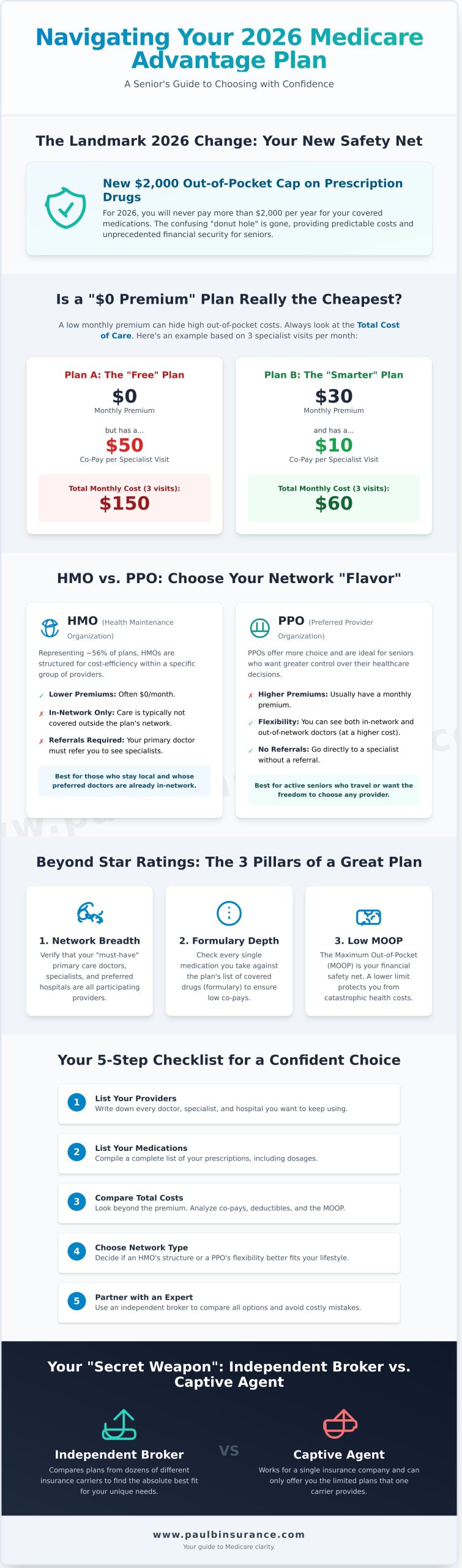
Many people fall into the trap of the “Zero-Dollar” premium. It’s a tempting offer. You see a $0 monthly bill and assume it’s the most affordable option. However, “free” often comes with a hidden price tag in the form of higher co-pays or limited doctor choices. If you visit a specialist three times a month, a plan with a $30 premium and a $10 co-pay is much cheaper than a $0 premium plan with a $50 co-pay. We always look at the total cost of care, not just the monthly bill. If you’re just starting your research, check out our comprehensive Medicare Advantage guide for a deeper dive into the basics.
The Three Pillars of a Top-Tier Plan
To find the best medicare advantage plans for seniors in your specific ZIP code, we focus on three non-negotiable factors. First is network breadth. We verify that your primary doctors and specialists are participating providers so you don’t face unexpected out-of-network bills. Second is formulary depth. We check every single medication you take against the 2026 plan tiers to ensure you aren’t paying Tier 4 prices for Tier 2 drugs. Finally, we look at the Maximum Out-of-Pocket (MOOP) limit. For 2026, most plans have set these limits to protect you from financial ruin during a health crisis, and we ensure your chosen plan keeps that ceiling as low as possible.
Why 2026 is a Landmark Year for Medicare
This year marks a massive shift in how you pay for healthcare. We’ve officially moved past the old “donut hole” coverage gap that used to cause so much stress at the pharmacy counter. This change simplifies your budgeting because your costs stay more consistent throughout the entire year. For the 2026 plan year, a mandatory $2,000 out-of-pocket cap for prescription drugs is fully in effect, ensuring you never pay more than that amount for your covered medications in a single calendar year. This protection provides a level of financial security that seniors haven’t seen in decades.
Navigating the 2026 Medicare Advantage Landscape
We know the 2026 Medicare maze feels more complex than ever. With an average of 43 plans available in many counties this year, the sheer volume of mailers and commercials can be exhausting. Our goal is to replace that stress with a clear path forward. Finding the best medicare advantage plans for seniors isn’t about picking the one with the flashiest celebrity spokesperson. It’s about matching the plan “flavor” to your actual life and health needs.
The 2026 landscape is defined by refined choices. While the core benefits remain steady, the way these plans deliver care has shifted toward more personalized management. We see three primary types of plans dominating the market: Health Maintenance Organizations (HMOs), Preferred Provider Organizations (PPOs), and Special Needs Plans (SNPs). Each serves a different purpose, and picking the wrong one can lead to unexpected bills or restricted access to your favorite specialists. Learning how to choose a Medicare Advantage plan starts with understanding how these networks function in your specific zip code.
HMO vs. PPO: A Simple Comparison
HMOs remain the most common choice in 2026, making up roughly 56 percent of available plans. These plans generally offer the lowest monthly premiums, often $0, but they require you to stay within a specific network of doctors. You will also need a referral from your primary care physician to see a specialist. This works well if you stay local and your doctors are already in the network. PPOs, however, offer the flexibility that many active seniors crave. In 2026, PPO plans allow you to see any doctor who accepts Medicare, though you will pay a higher coinsurance, often 30 percent or more, for out-of-network visits. If you are a “snowbird” who travels between states, the PPO is usually the superior choice for peace of mind.
Special Needs Plans (SNPs) are a vital tool we often recommend for those with specific challenges. These plans are tailored for individuals with chronic conditions like diabetes, chronic heart failure, or those who are dually eligible for Medicare and Medicaid. In 2026, these plans have expanded their care coordination services. This means you get a dedicated care manager to help synchronize your various doctors and medications, ensuring nothing falls through the cracks. For someone managing a complex condition, an SNP is often the best medicare advantage plans for seniors because it focuses on specialized outcomes rather than general care.
Extra Benefits: More Than Just Medical
The “ancillary” benefits of 2026 plans have become more practical and less about gimmicks. We are seeing a significant trend where plans offer flexible “spend-down” cards. These cards might provide $50 to $150 per month to cover groceries, utilities, or over-the-counter health items. Transportation benefits have also improved, with many plans now offering up to 24 one-way trips to medical appointments or the pharmacy each year. These aren’t just perks; they are essential tools for maintaining independence.
Dental, vision, and hearing coverage are standard in nearly 97 percent of 2026 Advantage plans, but the depth of coverage varies wildly. Some plans only cover cleanings, while others provide a $2,500 annual allowance for implants or root canals. If you need more than basic coverage, see our dental insurance options to ensure your specific needs are met. We want you to feel confident that your plan covers you from head to toe. You can always schedule a quick chat with us to see which 2026 benefits align with your lifestyle goals.
Medicare Advantage vs. Medigap: Which Path Leads to More Peace of Mind?
We know the “mailbox season” brings a flood of flyers that make everything feel more complicated than it needs to be. The biggest hurdle most seniors face is deciding whether to go with a private Advantage plan or stay with Original Medicare and a Supplement. It’s not a matter of which one is “better” in a vacuum. It’s about which one gives you confidence when you walk into a doctor’s office. In 2026, we see more people than ever trying to weigh the $0 premium of an Advantage plan against the total freedom of Medigap.
Comparing the total cost of ownership is the only way to see the full picture. A Medigap Plan G might cost $1,980 in annual premiums for 2026, but your medical bills after that are almost non-existent. Contrast that with the best medicare advantage plans for seniors that have no monthly premium. You save $1,980 upfront, but a single three-day hospital stay could cost you $1,200 in co-pays. If you have a year with several health challenges, the Advantage plan could actually be the more expensive route. We help you run these scenarios so you can sleep better at night.
Deciding between these paths requires a clear strategy. The Modern Medicare Agency suggests using a comprehensive checklist to evaluate if a plan’s network and co-pays align with your budget. This helps remove the guesswork and replaces it with a logical plan. We want you to feel empowered, not pressured by a salesperson who only shows you one side of the coin.
The network lock-in is a reality that catches many off guard. When you choose an Advantage plan, you are essentially trading your Medicare card for a private insurance network. If your favorite specialist leaves that network in June 2026, you might have to find a new doctor or pay significantly more. We also remind our clients about guaranteed issue rights. In most states, if you stay in an Advantage plan for more than a year, you lose the right to switch back to a Supplement without answering health questions. This can be a scary prospect if your health changes and you suddenly want the broader access a Supplement provides.
Our goal is to move you from confusion to confidence by laying out every detail. We don’t want you to discover a hidden cost or a restricted doctor only after you’ve signed the paperwork. By looking at the best medicare advantage plans for seniors alongside the top Medigap options, we ensure your coverage fits your lifestyle and your wallet.
When Medicare Advantage is the Best Choice
We find this path works well for seniors who are relatively healthy and prefer a predictable monthly budget. If you want your dental, vision, and hearing coverage bundled into one card, Advantage plans provide that simplicity. In 2026, the $2,000 cap on out-of-pocket drug costs makes these all-in-one plans even more attractive for those who want to avoid managing a separate Part D plan.
When to Consider a Supplement Instead
We recommend a Supplement for those who want total freedom. You can see any doctor in the country who accepts Medicare, which is roughly 98 percent of providers. This is vital if you spend winters in Florida or travel to see grandkids. The Modern Medicare Agency can help you understand how Medigap plans differ in their approach to doctor access compared to the restricted networks found in many Advantage options.
Our 5-Step Checklist for Choosing the Best Plan
Finding the right coverage feels like trying to solve a puzzle where the pieces keep changing shape. We know how overwhelming it is to see stacks of mail and hear endless commercials. Our goal is to replace that noise with a simple, logical path. To find the best medicare advantage plans for seniors in 2026, we use a specific process that protects your health and your wallet.
- Step 1: Verify your “Must-Have” Doctors. A printed directory is often outdated before it even hits your mailbox. We always tell our clients to contact their doctor’s office directly to ensure they still participate in the specific 2026 network.
- Step 2: Run your current prescriptions. Every year, insurance companies change their formularies. A drug that was covered in 2025 might be dropped or moved to a higher “tier” in 2026. We check every single medication you take against the new 2026 data.
- Step 3: Compare the Maximum Out-of-Pocket (MOOP). This is your financial safety net. If you have a difficult health year, the MOOP is the absolute most you will pay for covered services. We look for plans that keep this number as low as possible.
- Step 4: Audit the “Extras.” Many plans boast about free gym memberships or grocery cards. We help you look past the flashy perks to see if the dental, vision, and hearing benefits actually cover the services you need, like root canals or high quality hearing aids.
- Step 5: Consult with an independent broker. A “captive” agent only works for one company. We represent 40+ different carriers because we want to find the plan that fits you, rather than forcing you into a plan that fits the company.
The Prescription Drug Audit
The year 2026 brings a major shift for your pharmacy costs. Under the rules fully implemented this year, there’s now a $2,000 cap on out-of-pocket spending for prescription drugs. This change means we need to look at how each plan handles your specific medications before you reach that limit. We want to ensure you don’t overpay in the early months of the year. You can get the full story on Medicare Part D and how these new caps affect your total costs.
The Doctor Verification Hack
Don’t just ask the person at the front desk if they “take” your insurance. They might say yes because they recognize the company name, but they might not realize your specific plan is out of network. Instead, ask to speak with the billing manager. They are the ones who actually process the claims and know exactly which 2026 contracts are active. This one simple step prevents thousands of dollars in unexpected bills.
We are here to lead you from a state of confusion to a place of total confidence. If you want to see a side by side comparison of the best medicare advantage plans for seniors in your specific zip code, we can help. Our team is never rushed and we never pressure you into a decision. We simply provide the clarity you deserve.
Ready to find your perfect plan without the stress? Schedule a Call With Paul to get started today.
Why an Independent Broker is Your Secret Weapon
Finding your way through the Medicare maze often feels like a full-time job. You are likely getting dozens of mailers every day, each claiming to offer the best medicare advantage plans for seniors in 2026. Most of these advertisements come from captive agents. These are people who work for one specific insurance company. They can only sell you what their employer offers, even if a different company has a plan that fits your health needs better. We do things differently. As independent brokers, we don’t work for the insurance companies; we work for you. We have no loyalty to any one brand. Our only goal is to find the plan that keeps your doctors in-network and your prescription costs at their lowest.
Our team uses specialized 2026 comparison software to analyze options from 40 different carriers in about 12 minutes. This technology looks at your specific medications and your preferred specialists to see which company offers the highest value for your situation. In 2026, the landscape has changed significantly with new regulations regarding out-of-pocket maximums and prescription drug caps. We track these shifts daily so you don’t have to spend your weekends reading 100-page benefit books. We provide a side-by-side look at the data so the choice becomes clear.
The best part of this process is that our help costs you $0. You will never receive a bill from us for our consulting services. Insurance carriers pay us a flat commission to help you enroll and stay organized. Your monthly premium is exactly the same whether you sign up by yourself or use our expert guidance. You essentially get a dedicated advocate for free. We also stay by your side all year long. If you get a confusing medical bill in June or your pharmacy tells you a drug isn’t covered in October, we are the first phone call you make. We handle the hold times and the paperwork so you can focus on your health.
From Confusion to Confidence
We simplify the jargon so you know exactly how your plan works before you ever use it. You won’t hear us use confusing industry terms without explaining them in plain English first. Our promise is simple: you will never feel rushed or pressured. We provide honest guidance based on your specific health data, not sales quotas. We want you to feel a sense of relief when you hang up the phone, knowing your 2026 healthcare is secure and predictable.
Ready to Find Your Best Plan?
Choosing the right coverage is a major decision that affects your physical health and your bank account. A personalized review ensures you don’t miss out on extra benefits like dental, vision, or transportation services that vary between providers. You deserve to have a professional in your corner who understands the 2026 market. Schedule a Call with Paul to start your 2026 Medicare plan comparison today. Let’s find the best medicare advantage plans for seniors that meet your unique needs together.
Moving From Confusion to Confidence in 2026
Finding the right coverage shouldn’t feel like a full-time job. We’ve shown you that a high star rating doesn’t always mean a plan is the right fit for your specific doctors or prescriptions. In 2026, the landscape has shifted; our 5-step checklist is now a vital tool to help you avoid hidden costs and network gaps. Finding the best medicare advantage plans for seniors is about matching a plan to your unique life, not just picking the most popular name on a brochure. We believe you deserve a partner who listens and protects your interests every step of the way.
We’ve provided unbiased, expert guidance since day one. With access to over 40 insurance carriers and licenses in 34 states, we help you compare options without any pressure or rush. You don’t have to navigate these complex 2026 changes alone. We’ll help you steer clear of costly enrollment mistakes so you can enjoy the peace of mind you’ve earned. Ready to see which 2026 options work best for your budget and health needs? Schedule a Call With Paul for a Free 2026 Plan Review today. We’re excited to help you move forward with total clarity and security.
Frequently Asked Questions
What is the highest-rated Medicare Advantage plan for 2026?
The Centers for Medicare and Medicaid Services awarded 5-star ratings to 425 plans for the 2026 plan year, with UnitedHealthcare and Humana leading the rankings in most counties. We help you identify these top-tier options by reviewing the Medicare Star Ratings that measure clinical quality and member satisfaction.
Choosing a 5-star plan allows you to switch once during the year outside standard windows. This gives you peace of mind that you’ve secured one of the best medicare advantage plans for seniors available in your specific zip code.
Will my Medicare Advantage plan change in 2026?
Yes, your plan’s costs and benefits update every January 1, which is why your carrier mailed an Annual Notice of Change by September 30, 2025. We recommend reviewing this document to see if your monthly premium increased from $0 to $15 or if your co-pays for specialist visits rose.
If your current plan no longer fits your budget or covers your medications, we can find a more stable alternative together. We simplify the jargon so you know exactly how these changes affect your wallet before the new year begins.
Is there a limit on how much I will pay for drugs in 2026?
You’ll never pay more than $2,000 out-of-pocket for covered prescription drugs in 2026 due to the Inflation Reduction Act. This $2,000 cap applies to all Part D plans and Medicare Advantage plans with drug coverage. It’s a major relief for the 1 in 4 seniors who previously spent thousands on high-cost medications.
We’ll ensure your specific prescriptions are on the plan’s formulary to maximize these savings. This new limit provides the confidence you need to manage your health without the fear of unlimited pharmacy bills.
Can I go back to Original Medicare if I don’t like my Advantage plan?
You can switch back to Original Medicare during the Medicare Advantage Open Enrollment Period, which runs from January 1 to March 31, 2026. If you make this change, you can also join a standalone Part D drug plan for your prescriptions.
We remind our clients that returning to Original Medicare doesn’t guarantee you can buy a Medigap policy without medical underwriting. Unless you’re in a “trial right” period, you might face higher costs or coverage denials for pre-existing conditions. We’ll guide you through these rules to protect your options.
What is the difference between an HMO and a PPO in 2026?
An HMO generally requires you to see doctors within a specific network and get referrals, while a PPO allows you to see any provider who accepts Medicare. In 2026, HMOs often feature $0 premiums and lower co-pays to help you save money.
PPOs offer more freedom, but you’ll usually pay a 30% coinsurance for out-of-network services. We’ll help you weigh these options based on your favorite doctors and how much flexibility you need. Our goal is to move you from confusion to confidence when choosing your network style.
How do I know if my doctor is in a Medicare Advantage network?
We verify your doctor’s status by checking the 2026 provider directory or calling their office directly with your specific plan ID. Network participation can change annually, so it’s vital to check before the January 1 start date.
About 95% of doctors participate in Medicare, but they don’t all contract with every private Advantage plan. We take the guesswork out of this process by confirming your medical team is covered. This step ensures you don’t face unexpected bills from out-of-network providers.
Are there Medicare Advantage plans with no monthly premium?
Many carriers offer $0 premium plans in 2026, though you must continue paying your Part B premium, which is $185.00 for most beneficiaries this year. These options are often the best medicare advantage plans for seniors because they include dental, vision, and hearing benefits at no extra cost.
We’ll show you how a $0 premium plan balances out with your expected co-pays for hospital stays or diagnostic tests. It’s about finding the lowest total cost for your health needs, not just the lowest monthly bill.
What happens if I miss the Medicare Open Enrollment period?
If you miss the December 7 deadline, you generally can’t change your coverage until the next year unless you qualify for a 60-day Special Enrollment Period. You might qualify for this window if you move to a new zip code or lose employer-sponsored insurance.
We help you navigate these specific windows so you don’t get stuck with a plan that doesn’t meet your needs. Steer clear of costly enrollment mistakes and late penalties by letting us monitor these important dates for you.

Article by
Paul Barrett
Paul Barrett, CMIP is the founder of The Modern Medicare Agency, an independent Medicare-only brokerage based in Melville, NY. With 18 years of Medicare-exclusive experience, a CMIP designation, and more than 5,000 clients served across 37 states, Paul is one of the most credentialed independent Medicare specialists on Long Island — and one of the most direct.
He represents 40+ carriers with no quotas and no allegiances, which means his recommendations are based entirely on what fits each client's specific situation. He is the author of Medicare Mastery Unlocked and host of the Wise Guys Retirement Talk podcast. His content is grounded in primary sources, real carrier intelligence, and 18 years of watching what happens when people get Medicare right — and when they don't.
📞 631-358-5793 | paulbinsurance.com